Patients with Chronic Kidney Disease (CKD) often need angioplasty or fistuloplasty, but the use of contrast dye can worsen kidney function. Ultra–low contrast techniques allow interventional specialists to perform these procedures safely with minimal or near-zero contrast, preserving kidney health.

Ultra–low contrast vascular interventions help CKD patients undergo life-saving angioplasty and fistuloplasty safely without worsening kidney function.
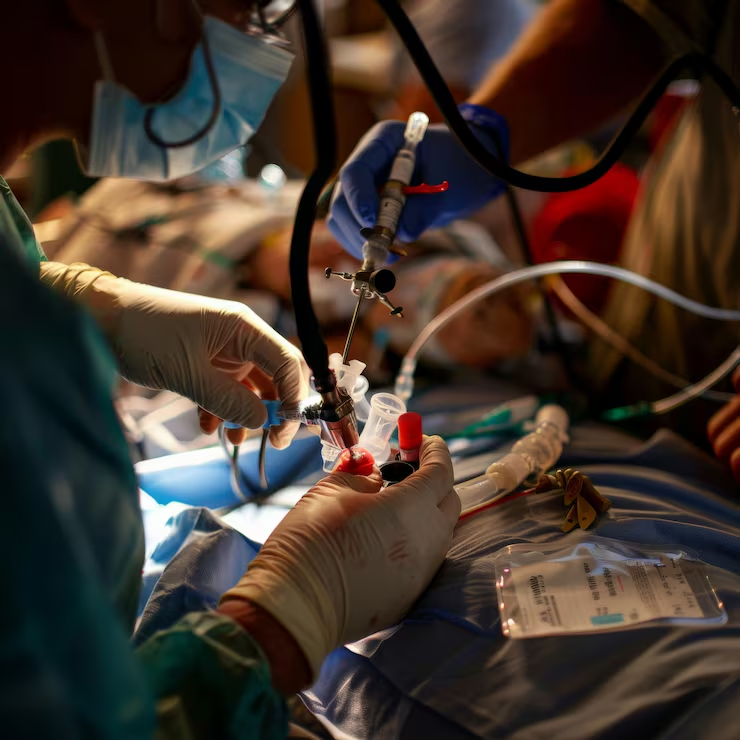
What Is Ultra–Low Contrast Angioplasty?
Angioplasty is a procedure used to open narrowed or blocked arteries. In CKD patients, traditional angioplasty uses contrast dye that can cause contrast-associated acute kidney injury (CA-AKI). Ultra–low contrast angioplasty (ULCA) uses:
- Minimal dye volumes (as low as 3–8 mL)
- IVUS (Intravascular Ultrasound) guidance
- CO₂ angiography when appropriate
- Fluoroscopy & roadmap imaging
- Physiological pressure measurements
When Is Ultra–Low Contrast Angioplasty Needed?
Recommended for patients with:
- Chronic kidney disease (CKD stage 3–5)
- Dialysis-dependent patients
- Diabetic kidney disease
- Single functioning kidney
- History of contrast-induced nephropathy
- High creatinine / low eGFR
Ultra–Low Contrast Fistuloplasty (AV Fistula Angioplasty)
For Preservation of Dialysis Access AV fistulas and AV grafts may develop:
- Narrowing (stenosis)
- Thrombosis
- Poor flow
- Prolonged bleeding
- Difficulty cannulating
- Ultra–low contrast fistuloplasty repairs these issues with:
- Zero-contrast CO₂ venography
- Duplex ultrasound guidance
- Tiny amounts of iodinated dye (only if absolutely necessary)
How These Procedures Are Performed
- Ultrasound-guided vascular access
- Baseline CO₂ imaging or IVUS scanning
- Advancement of guidewires and balloons using roadmap imaging
- Angioplasty of stenosed segment
- Repeat CO₂ or IVUS imaging to confirm result
- Very small dye test (optional, 1–3 mL) only if needed
- Compression or closure device at puncture site
Advantages for CKD Patients
- Protects kidney function: Greatly reduces risk of contrast-associated renal injury
- Safe for dialysis patients: Does not overload the system with iodinated dye
- High accuracy with IVUS: IVUS provides a 360° view of the vessel without using dye
- Effective for all vascular beds:
- Peripheral arteries
- Renal arteries
- Coronary arteries (in special situations)
- AV fistulas & grafts