What is ASD?
Atrial Septal Defect (ASD) is a hole in the wall (septum) that separates the heart’s two upper chambers (atria). This causes oxygen-rich blood to flow abnormally from the left atrium to the right atrium.
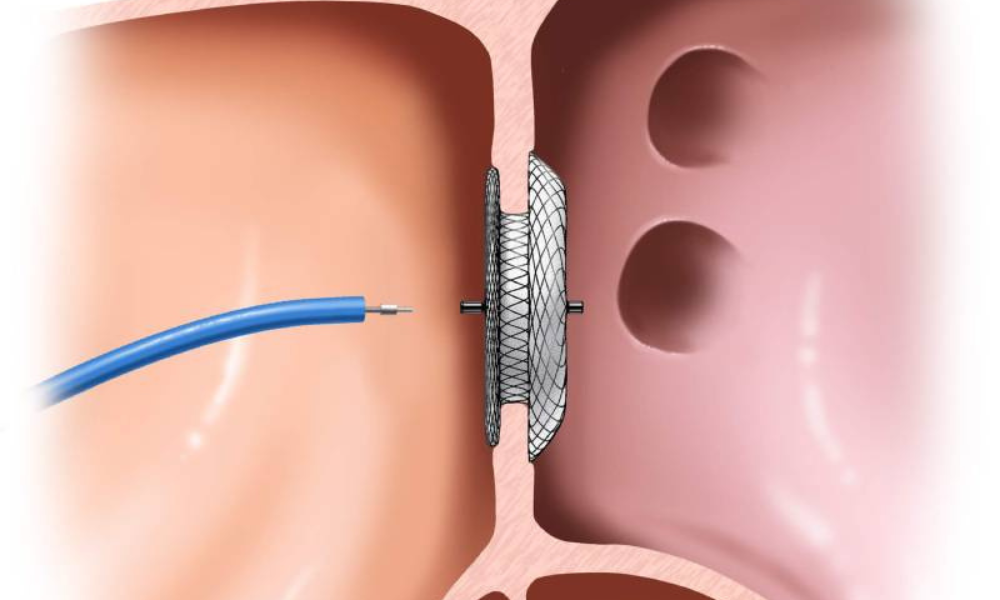
ASD device closure is a safe, minimally invasive procedure that seals the defect without open-heart surgery, allowing faster recovery and excellent long-term outcomes.
Types of ASD
- Ostium Secundum (most common; suitable for device closure)
- Ostium Primum
- Sinus Venosus
- Coronary Sinus ASD
Only Ostium Secundum ASD is amenable to catheter-based device closure.
Who Needs ASD Device Closure?
- Significant left-to-right shunt
- Right atrial or right ventricular enlargement on Echo
- Symptoms: breathlessness, fatigue, poor exercise tolerance
- History of stroke due to paradoxical embolism
- Recurrent chest infections (especially in children)
- Pulmonary hypertension (early stages)
Procedure Overview: Transcatheter ASD Device Closure
A minimally invasive, no-scar procedure, performed in a cardiac cath lab.
Step-by-step:
- Done under local or general anesthesia
- Catheter inserted through a vein in the groin
- Balloon sizing of the ASD (if needed)
- A special umbrella-like occluder device delivered through catheter
- Device opens on both sides of the septum and seals the hole
- Catheter removed — no stitches
⏱ Duration: 45–90 minutes
🛏 Hospital Stay: Usually 1 day
🎯 Benefits of ASD Device Closure
- No open-heart surgery
- No large cuts or scars
- Faster recovery time
- Less pain
- Excellent long-term results
- Prevents future complications (heart failure, arrhythmias, stroke)
⚠️ Risks (Rare)
- Device embolization (<1%)
- Temporary arrhythmias
- Minor groin bleeding
- Allergic reaction to contrast dye
- Residual shunt (small, usually closes over months)
🧒 ASD Closure in Children
- Safe and commonly done after age 3–4
- Helps prevent future lung hypertension and right heart enlargement
🧑 ASD Closure in Adults
Prevent long-term complications:
- Atrial fibrillation
- Heart failure
- Pulmonary hypertension
- Stroke risk
💊 Post-Procedure Care
- Aspirin ± Clopidogrel for 3–6 months
- Avoid strenuous activity for 2–3 weeks
- Avoid dental procedures for 6 months
- Echo follow-up at 1 month, 6 months, 1 year